Island at a Glance
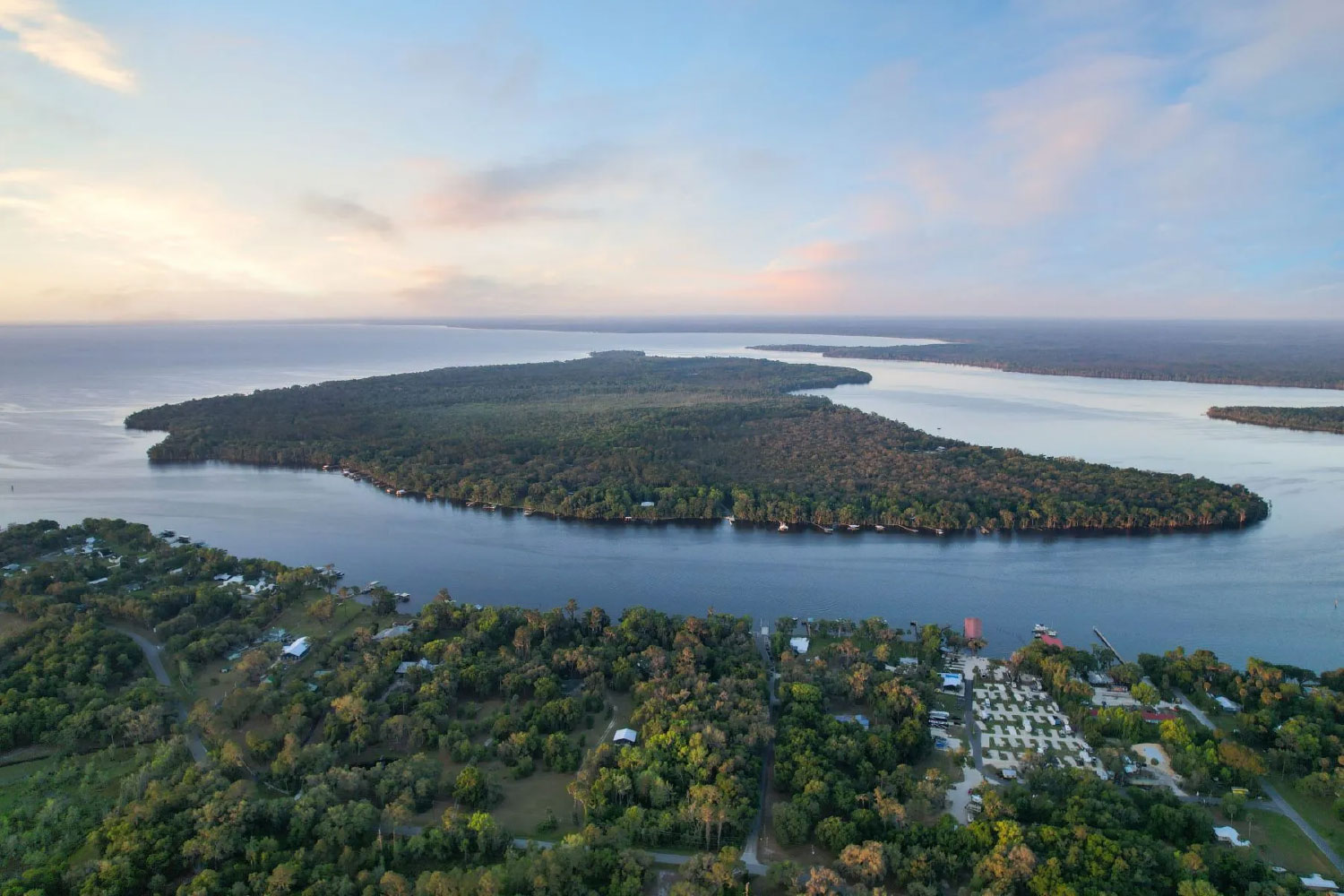
- Location: Lake George, Putnam County, Florida
- Island Size: Approximately 1,800 acres
- Lake: Lake George — the second largest lake in Florida (~73 square miles)
- Access: By boat or private ferry only — no road connection to the mainland
- Population: Small year-round community of residents
- Elevation: Relatively low-lying, typical of Florida's landscape
- County: Putnam County, Florida
- Nearest Towns: Georgetown, Palatka, and Crescent City
History
Native American Heritage
Long before European contact, the shores of Lake George and the land that would become Drayton Island were inhabited by Native American peoples, including the Timucua. The lake's rich fisheries and abundant game made the region a vital resource for indigenous communities for thousands of years.
Spanish Colonial Period
Spanish explorers traversed the Lake George area as early as the 16th century, and the region fell under Spanish territorial control during Florida's colonial era. Land grants issued under Spanish rule shaped the early ownership and settlement patterns of the island and surrounding territory. The island's name honors William Henry Drayton, a South Carolina patriot and statesman from the Revolutionary era.
Plantation & Agricultural Era
In the antebellum period, the fertile soil of Drayton Island supported agricultural operations, as it did on many Florida river islands. The St. Johns River corridor, of which Lake George is a part, was one of Florida's earliest settled regions, with plantations and homesteads dotting the riverbanks and island shores.
Post–Civil War & the Orange Grove Era
Following the Civil War, Florida's interior experienced a wave of northern settlement and investment. Drayton Island, like much of the St. Johns River country, saw significant orange grove cultivation in the late 19th century. The region's mild climate and rich soil made citrus a natural fit. Freezes in the 1890s severely damaged Florida's citrus industry, reshaping settlement patterns across the state.
20th Century to Today
Over the 20th century, Drayton Island transitioned from an agricultural outpost to a quiet residential community. Its island geography has preserved a way of life that feels deliberately removed from the pace of modern Florida — a quality its residents clearly value. Today the island remains a small, private community, accessible only by water, with a character all its own.
Lake George Facts
- Size: Approximately 73 square miles — second largest lake in Florida
- Depth: Relatively shallow, averaging 7–8 feet with some areas deeper
- Part of: The St. Johns River system — the longest river in Florida
- Water: Brackish-influenced; connected to the ocean via the St. Johns River
- Fish Species: Largemouth bass, crappie, bluegill, striped bass, catfish, and more
- Wildlife: Florida manatee, American alligator, bald eagle, osprey, and diverse waterbirds
- Reputation: One of the top trophy largemouth bass fisheries in the southeastern U.S.